
What Is the Recommended Age for a Child’s First Orthodontic Visit?
Children should first see an orthodontist by age 7. At this age, enough permanent teeth have emerged for an orthodontist to identify developing issues like crossbites, crowding, or jaw growth problems. Early evaluation doesn’t always mean early treatment, but it allows your orthodontist to monitor growth and step in at the right time if needed.
While many parents assume orthodontic visits are only for teenagers with braces, the American Association of Orthodontists suggests a different approach. By age 7, your child has a mix of baby teeth and permanent teeth that reveals important clues about their dental development. This first visit is typically a free consult, not a treatment commitment, and it helps establish a baseline for your child’s oral health.
At Eggemeyer & Graham Orthodontics, serving families across the North Shore, our board-certified orthodontists evaluate children at this ideal age to catch potential concerns before they become more complex. Some children need early intervention; others just need monitoring. Either way, this initial evaluation puts you in control of their smile’s future.
How an Early Orthodontic Evaluation Works
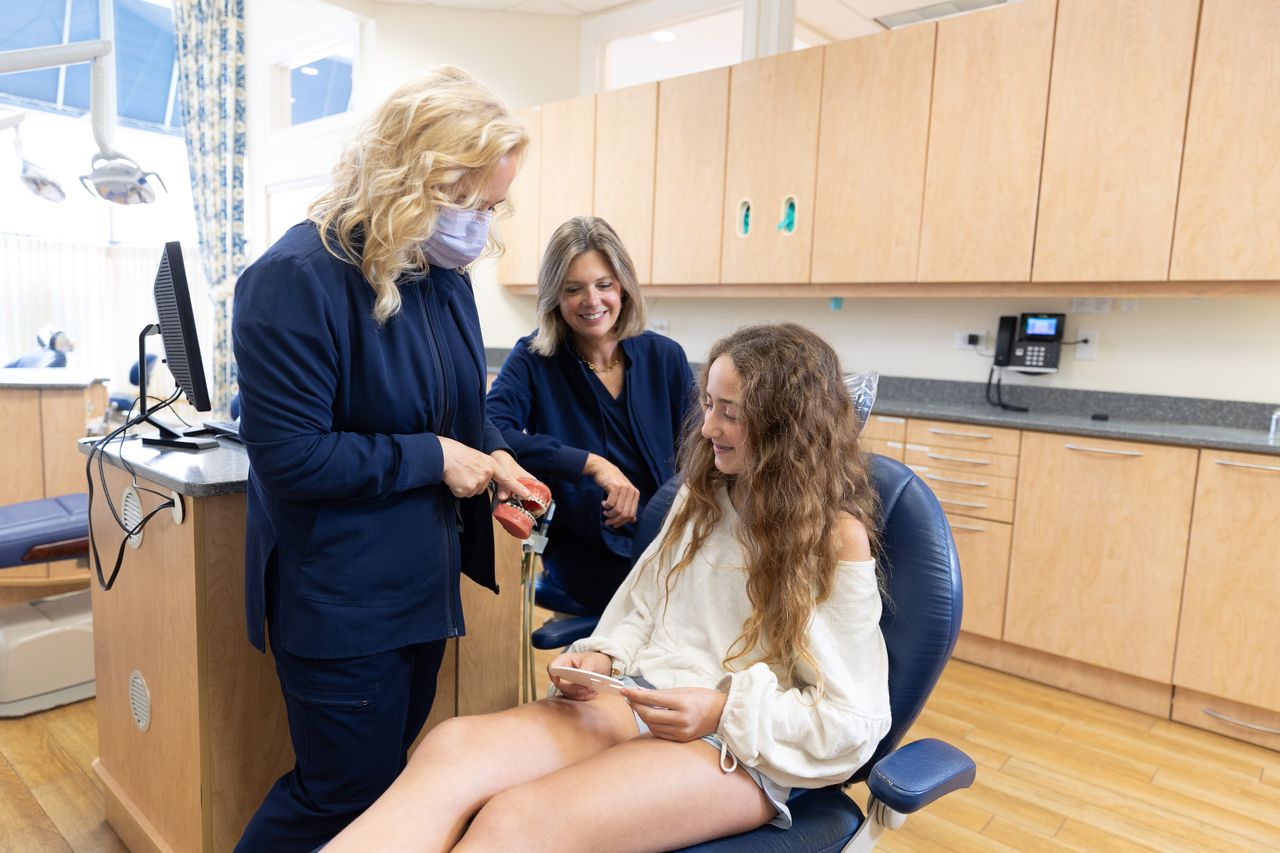
Your child’s first orthodontic visit is designed to be comfortable, informative, and pressure-free. As Diplomates of the American Board of Orthodontics, our doctors bring decades of pediatric experience to every first consultation. Here’s what to expect during the visit:
- Review of dental and medical history: We’ll ask about your child’s health, any breathing or sleep concerns, and habits like thumb-sucking.
- Visual examination: The orthodontist examines your child’s teeth, jaw alignment, and bite relationship. This hands-on assessment shows how teeth are coming in and whether the upper and lower jaws fit together properly.
- Digital imaging when needed: If more information is helpful, we may take digital X-rays or use 3D scanning technology to see developing teeth beneath the gums.
- Growth pattern discussion: Your orthodontist explains what they observe and how your child’s jaw and teeth are likely to develop over the coming years.
- Personalized recommendation: Based on the evaluation, you’ll receive one of three treatment plans: active monitoring with periodic check-ups, Phase 1 treatment to address a specific concern, or simply waiting until more permanent teeth arrive.
Most children evaluated at age 7 don’t need immediate treatment. The visit establishes a relationship with your orthodontist and creates a treatment plan tailored to your child’s development.
Benefits of Seeing an Orthodontist at Age 7
Early orthodontic evaluation offers advantages that aren’t available once your child’s jaw stops growing. Here’s why age 7 works best:
What Bite and Growth Issues Can Be Caught Early?
- Detects bite issues early: Problems like crossbites, overbites, underbites, and crowding are easier to identify and address when caught young.
- Guides jaw growth: While bones are still developing, orthodontists can influence how the upper and lower jaws grow in relation to each other.
- Creates space for permanent teeth: Interceptive treatment can make room for teeth that haven’t erupted yet, reducing the chance of impaction.
How Does Early Care Simplify Future Treatment?
- May reduce the need for extractions: By guiding growth early, some children avoid having permanent teeth removed later.
- Future treatment can be simpler. Children who receive Phase 1 treatment often have shorter, less complex Phase 2 treatment during their teen years.
- Harmful oral habits get addressed: Thumb-sucking, tongue thrusting, and mouth breathing can affect jaw development. Early intervention helps break these habits before they cause lasting changes.
According to the American Association of Orthodontists, early evaluation lets orthodontists provide timely treatment when it can be most effective, not necessarily immediate treatment, but treatment at the right time for each child.
Early Treatment vs. Waiting Until All Permanent Teeth Erupt
Not every child needs two phases of orthodontic treatment. Understanding the difference helps you make informed decisions about your child’s care.
| Factor | Phase 1 (Ages 7-10) | Phase 2 (Ages 11+) |
|---|---|---|
| Timing | While baby teeth remain | After most permanent teeth erupt |
| Goal | Guide jaw growth, address specific issues | Align all permanent teeth |
| Common Appliances | Expanders, partial braces, space maintainers | Full braces, Invisalign |
| Duration | Typically 9-18 months | Typically 12-24 months |
| Best For | Crossbites, severe crowding, jaw discrepancies | Full alignment and bite correction |
Some children benefit from Phase 1 treatment to correct a developing problem, followed by a resting period, then Phase 2 treatment for final alignment. Others skip Phase 1 entirely and begin treatment as teenagers when all permanent teeth have arrived.
The key distinction: Phase 1 treatment takes advantage of active growth to guide development. Once growth slows in the teen years, certain corrections become more difficult or require different approaches.
Your orthodontist will recommend the treatment plan that makes the most sense for your child’s specific situation. Monitoring without treatment is often the right choice when issues are mild or likely to resolve on their own.
What Affects the Cost of Phase 1 Orthodontic Treatment for Children?
At Eggemeyer & Graham Orthodontics, initial free consults are offered at no cost, letting you get expert guidance without financial commitment. When treatment is recommended, several factors influence the overall investment:
- Treatment complexity: Simple cases involving minor crowding cost less than complex bite corrections requiring multiple phases.
- Longer treatment timelines generally involve higher fees due to additional appointments and adjustments.
- Type of appliances: Phase 1 treatment with expanders or partial braces is generally less expensive than full braces or Invisalign.
- Insurance coverage: Many dental insurance plans include orthodontic benefits that cover a portion of treatment costs. Our team helps you understand your specific coverage.
- Flexible payment options spread the cost over the treatment period, making care accessible for most families on the North Shore.
Cost shouldn’t keep your child from care. During your free consult, we provide transparent pricing with no hidden fees and discuss all available payment options.
When Should a Child Visit the Orthodontist? Signs to Watch For
While every child should have an orthodontic evaluation by age 7, certain signs suggest an earlier visit may help. Watch for these indicators:
Tooth Development Concerns
- Baby teeth falling out unusually early (before age 5) or late (after age 7)
- Permanent teeth coming in crowded or in unexpected positions
- Teeth that appear blocked from erupting
Functional Issues
- Difficulty chewing or biting food
- Frequent cheek biting or roof-of-mouth irritation
- Speech difficulties that persist past typical developmental stages
Jaw and Breathing Patterns
- Mouth breathing during the day or while sleeping
- Snoring or restless sleep
- Jaws that shift, click, or pop when opening and closing
- Facial asymmetry or an unbalanced profile
Oral Habits
- Thumb-sucking or finger-sucking past age 5
- Tongue thrusting when swallowing
- Prolonged pacifier use
If you notice any of these signs, don’t wait until age 7. An earlier evaluation can determine whether intervention would benefit your child’s development.
Frequently Asked Questions
Is age 7 too young for braces?
Age 7 is typically too young for full braces, but it’s the ideal time for evaluation. Most children seen at this age don’t receive treatment, they’re simply monitored. When early treatment is needed, it usually involves appliances like expanders rather than traditional braces. Full braces typically come later, during the teen years.
What happens at the first orthodontic appointment?
The first visit includes a visual examination of your child’s teeth and jaw, a review of their dental history, and a conversation about what the orthodontist observes. Digital X-rays or 3D scans may be taken if needed. You’ll leave with a clear understanding of your child’s development and a recommended treatment plan, whether that’s monitoring, early treatment, or waiting.
Will my child definitely need braces?
Not necessarily. Many children evaluated at age 7 have healthy development and never need orthodontic treatment. Others benefit from monitoring over several years before any treatment begins. The evaluation simply gives you information about your child’s situation and what to expect.
How long does Phase 1 treatment last?
Phase 1 treatment typically lasts between 9 and 18 months, depending on the specific issue being addressed. After Phase 1, there’s usually a resting period while remaining permanent teeth come in. Your orthodontist will provide a timeline specific to your child’s treatment plan.
Can my child get Invisalign instead of braces?
Invisalign First is designed specifically for growing children and can address many of the same concerns as traditional Phase 1 appliances. Whether Invisalign is right for your child depends on their specific needs, maturity level, and ability to wear aligners consistently. Our team can discuss all treatment plans during your free consult.
Does insurance cover early orthodontic treatment?
Many dental insurance plans include orthodontic coverage that applies to Phase 1 treatment. Coverage varies by plan, so we recommend checking your specific benefits. Our team works with you to maximize your insurance benefits and offers flexible payment options for any remaining balance.
How do I schedule my child’s first orthodontic visit?
Early orthodontic evaluation gives your child a strong start toward a healthy, confident smile. At Eggemeyer & Graham Orthodontics, Dr. Jenny Eggemeyer and Dr. Libby Graham, both Diplomates of the American Board of Orthodontics, bring precision and genuine care to every young patient we see across the North Shore community. Request your free consultation today to learn what’s right for your child.